quotes

Absurdity of life

Absurdity of life

It happens that the stage sets collapse. Rising, streetcar, four hours in the office or the factory, meal, streetcar, four hours of work, meal, sleep, and Monday Tuesday Wednesday Thursday Friday and Saturday according to the same rhythm - this path is easily followed most of the time.

But one day the "why" arises and everything begins in that weariness tinged with amazement. Weariness comes at the end of the acts of a mechanical life, but at the same time it inaugurates the impulse of consciousness. For everything begins with consciousness and nothing is worth anything except through it.…

Read more → Show less ↑

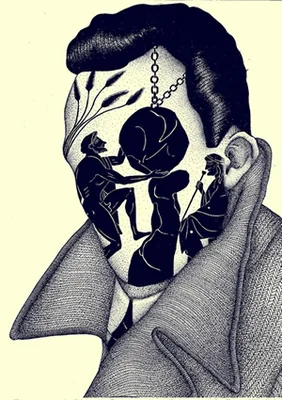
Excerpt from The Myth of Sisyphus (Albert Camus, 1942)

It happens that the stage sets collapse. Rising, streetcar, four hours in the office or the factory, meal, streetcar, four hours of work, meal, sleep, and Monday Tuesday Wednesday Thursday Friday and Saturday according to the same rhythm - this path is easily followed most of the time.

But one day the "why" arises and everything begins in that weariness tinged with amazement. Weariness comes at the end of the acts of a mechanical life, but at the same time it inaugurates the impulse of consciousness. For everything begins with consciousness and nothing is worth anything except through it.

During every day of an unillustrious life, time carries us. But a moment always comes when we have to carry it. We live on the future: 'tomorrow', 'later on', 'when you have made your way' ... such irrelevancies are wonderful, for, after all, it is a matter of dying. Yet a time comes when a man notices or says that he is thirty. Thus he asserts his youth.

But simultaneously he situates himself in relation to time. He takes his place in it. He admits that he stands at a certain point on a curve that he acknowledges having to travel to its end. He belongs to time and, by the horror that seizes him, he recognizes his worst enemy. Tomorrow, he was longing for tomorrow, whereas everything in him ought to reject it. The revolt of the flesh is the absurd.

A step lower and strangeness creeps in: perceiving that the world is 'dense', sensing to what degree a stone is foreign and irreducible to us, with what intensity nature or a landscape can negate us. At the heart of all beauty lies something inhuman, and these hills, the softness of the sky, the outline of these trees at this very minute lose the illusory meaning with which we had clothed them, henceforth more remote than a lost paradise. The primitive hostility of the world rises up to face us across millenia. For a second we cease to understand it because for centuries we have understood in it solely the images and designs we had attributed to it beforehand, because henceforth we lack the power to make use of that artifice. The world evades us because it becomes itself again. The stage-scenery masked by habit becomes again what it is. It withdraws at a distance from us. Just as there are days when, under the familiar face of a woman, we see as a stranger her we had loved months or years ago, perhaps we shall come even to desire what suddenly leaves us so alone. But the time has not yet come. Just one thing: that denseness and that strangeness of the world is the absurd.

The mind's deepest desire, even in its most elaborate operations, parallels man's unconscious feelings in the face of his universe: it is an insistence upon familiarity, an appetite for clarity. Understanding the world for a man is reducing it to the human, stamping it with his seal. The cat's universe is not the universe of the ant-hill. The truism 'All thought is anthropomorphic' has no other meaning. ... If man realized that the universe like him can love and suffer, he would be reconciled.

If one could only say just once: 'this is clear', all would be saved. But these men vie with one another in proclaiming that nothing is clear, all is chaos, that all man has is his lucidity and his definite knowledge of the walls surrounding him.

The mind, when it reaches its limits, must make a judgement and choose its conclusions. This is where suicide and the reply stand. ... At this point of his effort man stands face to face with the irrational. The absurd is born of this confrontation between the human need and the unreasonable silence of the world.

This world in itself is not reasonable, that is all that can be said. But what is absurd is the confrontation of this irrational and the wild longing for clarity whose call echoes in the human heart. The absurd is not in man nor in the world, but in their presence together. There can be no absurd outside the human mind.
Regicide and the rejection of salvation

Regicide and the rejection of salvation

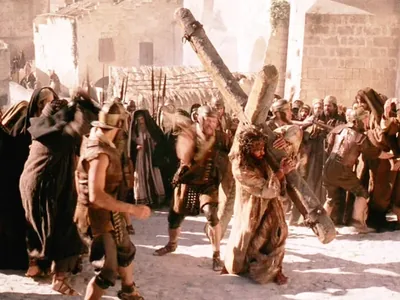
Christ came to solve two major problems, evil and death, which are precisely the problems that preoccupy the rebel. His solution consisted, first, in experiencing them. The man-god suffers, too - with patience. Evil and death can no longer be entirely imputed to Him since he suffers and dies. The night on Golgotha is so important in the history of man only because, in its shadow, the divinity abandoned its traditional privileges and drank to the last drop, despair intended, the agony of death.…

Read more → Show less ↑

Excerpts from The Rebel (Albert Camus, 1951)

Christ came to solve two major problems, evil and death, which are precisely the problems that preoccupy the rebel. His solution consisted, first, in experiencing them. The man-god suffers, too - with patience. Evil and death can no longer be entirely imputed to Him since he suffers and dies. The night on Golgotha is so important in the history of man only because, in its shadow, the divinity abandoned its traditional privileges and drank to the last drop, despair intended, the agony of death.

[…] In that Christ has suffered, and had suffered voluntarily, suffering was no longer unjust and all pain was necessary. In one sense, Christianity's bitter intuition and legitimate pessimism concerning human behavior is based on the assumption that overall injustice is as satisfying to man as total justice. Only the sacrifice of an innocent god could justify the endless and universal torture of innocence. Only the most abject suffering by God could assuage man's agony. If everything, without exception, in heaven and earth is doomed to pain and suffering, then a strange form of happiness is possible.

[...] Ivan (1) sides with mankind and stresses human innocence. He affirms that the death sentence which hangs over them is unjust. Far from making a plea for evil, his first impulse, at least, is to plead for justice, which he ranks above the divinity. Thus he does not absolutely deny the existence of God. He refutes Him in the name of a moral value. The romantic rebel's ambition was to talk to God as one equal to another. […] With Ivan, however, the tone changes. God, in His turn, is put on trial. If evil is essential to divine creation, then creation is unacceptable. We will no longer have recourse to this mysterious God, but to a higher principle - namely, justice. He launches the essential undertaking of rebellion, which is that of replacing the reign of grace by the reign of justice.

Even if God existed, even if the mystery cloaked a truth, Ivan would not admit that truth should be paid for by evil, suffering, and the death of innocents. He incarnates the refusal of salvation. Faith leads to immortal life. But faith presumes the acceptance of the mystery and of evil, and resignation to injustice. […] If truth does exist, it can only be unacceptable. Why? Because it is unjust. The struggle between truth and justice is begun here for the first time, and it will never end. If he had faith, he could, in fact, be saved, but others would be damned and suffering would continue. There is no possible salvation for the man who feels real compassion. He will continue to put God in the wrong by doubly rejecting faith as he would reject injustice and privilege.

The rebel defies more than he denies. […] He does not suppress God; he merely talks to Him as an equal. But it is not a polite dialogue. The slave begins by demanding justice and ends by wanting to wear a crown. His insurrection against his condition becomes an unlimited campaign against the heavens for the purpose of bringing back a captive king who will first be dethroned and finally condemned to death. […] When the throne of God is overturned, the rebel realizes that it is now his own responsibility to create the justice, order and unity that he sought in vain within his own condition, and in this way to justify the fall of God. Then begins the desperate effort to create, at the price of crime and murder if necessary, the dominion of man.

[…] From the moment that man submits God to moral judgement, he kills Him in his own heart. God is denied in the name of justice, but can the idea of justice be understood without the idea of God? […] From the moment that the freethinkers began to question the existence of God, the problem of justice became of primary importance. The throne of God totters and justice, to confirm its support of equality, must give it the final push by making a direct attack on His representative on earth. "We do not want to condemn the King, we want to kill him." In fact, if God is denied, the King must die.

[…] Cynicism, the deification of history and of matter, individual terror and State crime, these are the inordinate consequences that will now spring, armed to the teeth, from the equivocal conception of a world that entrusts to history alone the task of producing both values and truth. If nothing can be clearly understood before truth has been brought to light, at the end of time, then every action is arbitrary, and force will finally rule supreme. […] Nothing can discourage the appetite for divinity in the heart of man. The divinity of man is still on the march, and will be worthy of adoration only at the end of time. This apocalypse must be promoted and, despite the fact that there is no God, at least a Church must be built. Those who have chosen to kill and those who have chosen to enslave will successively occupy the front of the stage, in the name of a form of rebellion which has been diverted from the path of truth.

Footnotes: (1) Ivan is a character from the novel The Brothers Karamazov written by Dostoevsky.

On relationships, breakups, longings and heartache

On relationships, breakups, longings and heartache

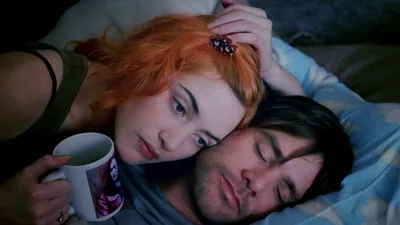
You don't let go once. You say goodbye over a lifetime. You might not have thought about her for ten years, then you'll hear a song or you'll walk past somewhere you once went together - something will come to the surface that you'd totally forgotten about. And you say another goodbye. You have to be prepared to let go and let go and let go a thousand times.

She asks him if the future of relationships will move away from this idea of belonging to each other. And he says that, while you can intellectually believe in that, when you are actually in love with somebody, you want to possess each other. I'd like to be more progressive and detach monogamy from love, but I can't.

When someone says they don't want to be with you, you feel the pain of every single one of those times in life where you felt like you weren't good enough. You live through all of it again.…

Read more → Show less ↑

Excerpt from Good Material (Dolly Alderton, 2023)

You don't let go once. You say goodbye over a lifetime. You might not have thought about her for ten years, then you'll hear a song or you'll walk past somewhere you once went together - something will come to the surface that you'd totally forgotten about. And you say another goodbye. You have to be prepared to let go and let go and let go a thousand times.

She asks him if the future of relationships will move away from this idea of belonging to each other. And he says that, while you can intellectually believe in that, when you are actually in love with somebody, you want to possess each other. I'd like to be more progressive and detach monogamy from love, but I can't.

When someone says they don't want to be with you, you feel the pain of every single one of those times in life where you felt like you weren't good enough. You live through all of it again.

I'm sorry that I loved you so much more than I liked myself, that must have been a lot to carry. I’m sorry I didn’t take care of you the way you took care of me. And I'm sorry I didn't take care of myself, either.

‘One day,’ I repeat, and we both smile. ‘One day when we’re ready to be friends or something.’

‘Yes,’ he says. ‘Or something.’

‘Good,’ I say.

There’s a pause.

‘I can’t wait for that day,’ he says.

On escaping the trappings of modern life through nature

On escaping the trappings of modern life through nature

And what magnificent country I have seen - wild, tremendous wasteland stretches, lost mesas, blue mountains rearing upward from the vermilion sands of the desert, canyons five feet wide at the bottom and hundreds of feet deep, cloudbursts roaring down unnamed canyons, and hundreds of houses of the cliff dwellers, abandoned a thousand years ago...

At such a time you felt the need to committing yourself to something absolute - life or truth or beauty - of being ruled by it in place of the man made rules that had been discarded. You needed to surrender to such ultimate purpose more fully, more unreservedly than you had ever done in the old, familiar, peaceful days, in the old life that was now abolished and gone for good.

People sought the therapeutic and spiritual values of retreat, not to escape but to find reality.

Read more → Show less ↑

Excerpt of Into the Wild (Jon Krakauer, 1996)

And what magnificent country I have seen - wild, tremendous wasteland stretches, lost mesas, blue mountains rearing upward from the vermilion sands of the desert, canyons five feet wide at the bottom and hundreds of feet deep, cloudbursts roaring down unnamed canyons, and hundreds of houses of the cliff dwellers, abandoned a thousand years ago...

At such a time you felt the need to committing yourself to something absolute - life or truth or beauty - of being ruled by it in place of the man made rules that had been discarded. You needed to surrender to such ultimate purpose more fully, more unreservedly than you had ever done in the old, familiar, peaceful days, in the old life that was now abolished and gone for good.

People sought the therapeutic and spiritual values of retreat, not to escape but to find reality.

On the rule of law and justification for obeying the law

On the rule of law and justification for obeying the law

"It is vital to the rule of law that the laws passed by the legislature are sound, rights-based, and measure up to the highest standards. For, judges are bound to apply the law as it is, not as what they wish it to be. The law should give protection to rights, not take them away, especially in Hong Kong, where structural democracy is still absent. [...] When the court applies a law which takes away fundamental rights, the confidence in the courts and judicial independence is shaken, even though the fault lies in the law, not with the judge who applies it, and that would strike at the foundation of our rule of law.…

Read more → Show less ↑

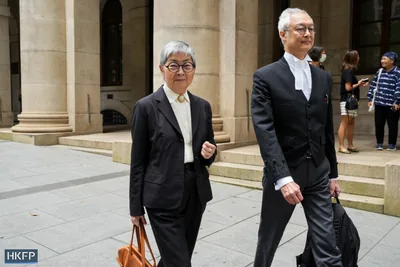
Margaret Ng's mitigating plea in 2021. Full speech here

"It is vital to the rule of law that the laws passed by the legislature are sound, rights-based, and measure up to the highest standards. For, judges are bound to apply the law as it is, not as what they wish it to be. The law should give protection to rights, not take them away, especially in Hong Kong, where structural democracy is still absent. [...] When the court applies a law which takes away fundamental rights, the confidence in the courts and judicial independence is shaken, even though the fault lies in the law, not with the judge who applies it, and that would strike at the foundation of our rule of law.

The law is not perfect and lawyers know more than anyone else how imperfect the law is. So why should people respect and obey the law? The answer I gave myself is this - we can ask people to obey the law if it is the best approximation to justice. Justice is the soul of the law, without which the rule of law descends to the level of rule by force, even if it is force by majority.

There is no right so precious to the people of Hong Kong as the freedom of expression and the freedom of peaceful assembly. Not only is the freedom to speak the truth the core of human dignity, it is also the last safety valve in a democratic society. Respecting those rights is also part and parcel of defending the rule of law.

The rule of law not only has to be defended in court, or in LegCo, but also in the streets and in the community. When the people, in the last resort, had to give collective expression to their anguish and urge the government to respond, protected only by their expectation that the government will respect their rights, I must be prepared to stand with them, stand by them and stand up for them."

--Margaret Ng, Functional constituency (Legal), Legislative Council of Hong Kong 1997-2012. Mitigating plea after convicted of 'Organizing and participating in an unauthorised assembly' on 18.8.2019. Delivered 4.2021.