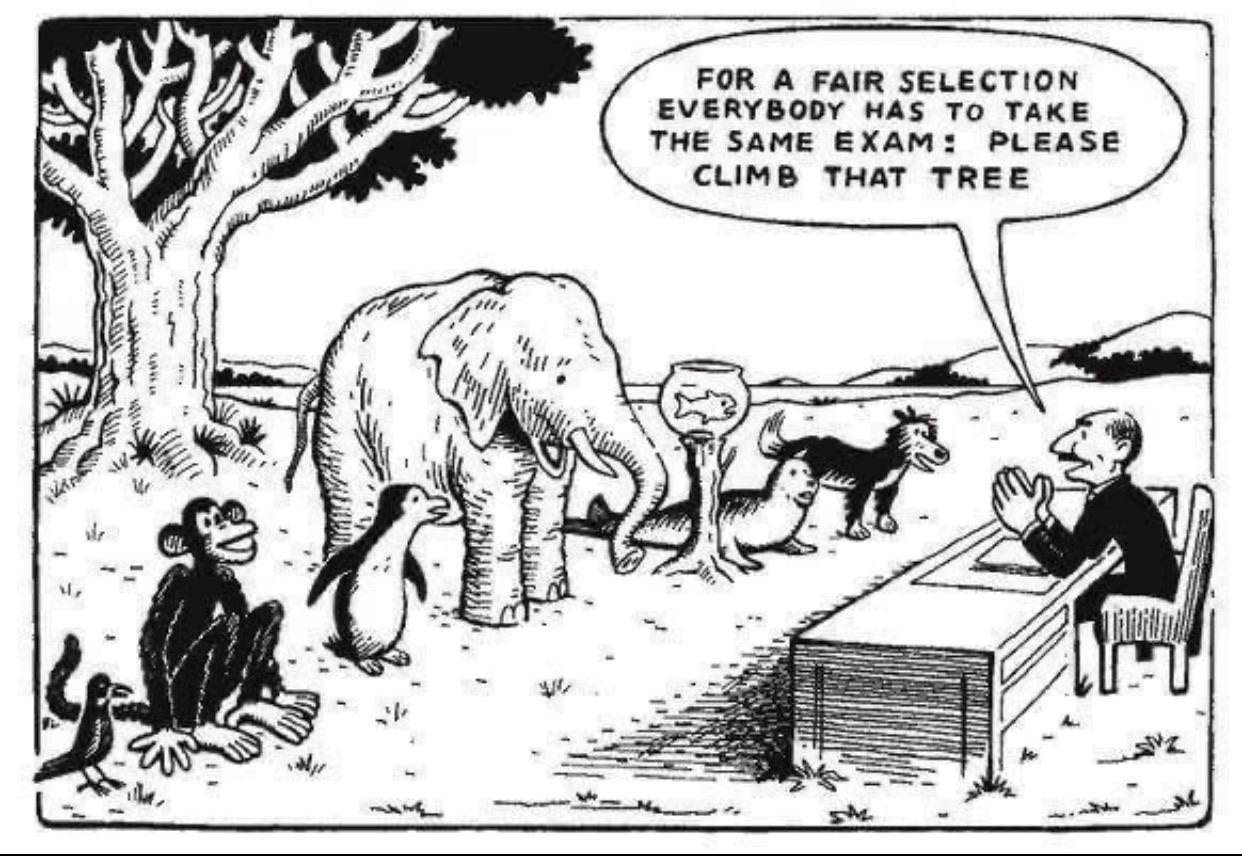
The oppression of the modern assessment
preface: one of my first attempts at writing a short essay on my less conventional takes of the world. I’ve wanted to post a critique of the nature of exams for quite a while, but I thought it would jinx my fellowship exam results if I posted it too early. What better time to post it than now when my sense of anger is still fresh. This is intended more as a polemic and less of a structured argument.
For a direct criticism of medical certification exams, this article will do better justice than anything I can write, although focused specifically on the US exams: The maintenance of certification exams as a fetish Archived post here
Excerpt (additions bracketed):
“[…] the insidious problem with the exam was not the content. To see the bad faith obscured by the questions, put aside the complaints [of “why is this in the exam?"] and ask instead, "what happens if I get the question wrong? What happens if I get them all wrong?" The answer is nothing. There are no consequences for failing this test, at all. [It] reveals the gimmick: the point of the test isn't to measure competence, but to convey the impression that competence was measured. The point of the test is to say that a test was given -- and nothing else.
[…] a flawed system isn't better than no system at all, it is worse than no system at all, because at least with no system we are forced to be accountable to ourselves for our education. "Not everyone will be so dedicated." Correct, but now those same undedicated people get an official blessing of their ignorance. […] the purpose of the test is to say a test was given, to prove to some hypothetically gullible entity that learning occurred.”
The all-encompassing assessment
We now live in a world where we are assessed even before our birth. In our mothers’ wombs, our gestational sac diameter can be measured within 4 weeks after fertilization. Then follows a host of other numbers, findings, measurements - diameters, fetal heart rate, presence or absence of certain genes. We are measured and summarized, compared against historical others. And at that stage we receive our first judgement from society, on whether we are on par, normal, flawed or needs attention. Do not underestimate this judgement, for it wields enough power to end a potential life. The infant-to-be gets his first taste of the discursive power of modern medicine.
This begins the endless, pervasive and constant assessments, on things big and small, that will come to define life in the modern era, our relationship to the world and how we view ourselves. Take how applications for competitive kindergartens are handled nowadays. We tally up the number of words a child can write and speak, grade mastery of one’s baser impulses in a contrived conversation, and infer the cognitive skill of a child who has reached the ripe age of 3. These abstract skills are then categorized, formalized in neat forms, and provided with numbers which adds to its authority. It is then ready to be assessed, compared and judged, in a formal manner bearing the hallmarks of consistency.
Through our childhood, our assessments grow in intensity and reach, each imbibed with a segment of power that in combination approximates the totality of the control society has on us. Assessments come in many forms. Some are a product of our bureaucratic state - think of social security eligibility or special needs assessment; some are clinical - health checkups, intelligence tests, growth charts; others are organizational-based, say music performance grades, tournaments, credit scores and certifications. In aggregate, the results form a wider network of a personal portfolio of scores where we eventually conceptualize into what is normality, what is desirable, and what needs to be remedied. This is the process which knowledge is generated, through the field of documentation (1), which starts defining who we are, and shapes how we view ourselves. These are all judgement of standards, worthiness and of identity, that form a fundamental measurement of who we are to the outside world, and eventually reflected to us as children by the society.
The rise of the ‘field of documentation’
Yes, we have tried to document and measure even in prehistoric times - the earliest record of humanity’s written systems, the Sumerian cuneiform, is for bookkeeping purposes after all - but it has revolved primarily on measurements of external objects - of acres of land, ounces of silver, crates of tea. But what is fundamentally different is that in the modern era, we have started to measure the body as the object, attempting to record our psyche, our trustworthiness, our competencies and weaknesses. It is uniquely in the age of computing and electronic records - the Information Age - that has enabled us to amass all sorts of personal information conceivable from every aspect of our lives, and store such information in an easily accessible manner ready for comparison. The presence of the Internet only hyper-charges this information connectivity. This modern system we have in the last 30 years is qualitatively different than what we ever had in the prior history of humanity. A child’s life can now be expressed in numbers and grades - his head circumference, his height, his blood type graded by percentiles and commonality; his conduct scores, his intelligence quotient, his school’s ranking, measured against a standardized criteria; whereas such numbers would be meaningless, insane even, to a parent from a century prior. We then go beyond recording into analyzing it, breaking it down into discrete data points, deconstructing it for comparison, with the subsequent creation of norms and standards. The system of documentation creates a unique set of knowledge and discourse impossible in prior ages, facilitated by computers, widespread documentation and analytic power. A child before the information revolution would have never known he was shorter than the world average but taller than the average in Asia; nor that his blood type is a rarity among others; nor his family’s income is exactly in the top quintile in his region. His identity (2) is increasingly expressed through numbers and measurements, and defined through them.
The birth of the modern examination state
Among all these numbers and measurements lie a type with disproportionate power, one that indelibly shapes the modern child’s identity and guides their trajectory for years to come. It is one of the most distorting measurements they will ever face. I speak, of course, of the modern examinations. Examinations itself is nothing new, having existed throughout history in various forms. But the modern examination state differs in that it is taken broadly and regularly, enabled by technological breakthroughs in logistics and information retrieval. This means for the first time in human history, we can attempt to use a set of assessments to set definitive norms that forms the basis of a convincing judgement.
While an archeology and genealogy of examinations would prove useful (3), we can be satisfied here with the fact that a mere century ago, there were no examinations taken broadly and consistently across a populace. ‘Public’ exams, exams open to the general public, were previously effectively limited to a small group of nobility and upper-class. European powers adopted the Chinese Imperial exams in the mid-18th century, and prestigious universities soon had their own entrance exams, but common people still mostly never laid hands on an exam paper in their entire lives. It is the post-World War 2 era that truly popularized exams. Exams grew in stature and importance, coinciding with the ruling elites’ wavering belief of their right to rule (4), amidst the clamor for justice and meritocracy in war-torn western liberal democracies. This confluence of circumstances elevated examinations as the gold standard on measurement of ability, labelled as blind to class and caste, conferring it with the legitimacy and power to stratify people. This also led to the proliferation of credentialism as guarantors of ability and competence, replacing guilds and apprenticeships that has been in place for centuries and millennia. In the short span of a decade after the 1950s, the use of assessments for credentialing became commonplace (5), with job openings suddenly requiring a bachelor’s degree as proof of competency. For high-skill occupations, the college attended became a symbol of competency itself, with the first university ranking reports published in the 1980s.
In any case, hierarchical assessments and credentialing, in the form of examinations, became an increasingly accepted proxy for competence. Outwardly, it replaced social status as gatekeepers of opportunities and wealth (6). Families of social elites once immune from commoner’s social strictures are now forced to chase after the recognition conferred by examinations, when it carries a prestige of its own. Failure to be admitted into the higher education system now exact a huge cost to individuals, in terms of opportunities both social and economic. This is the modern examination, a high-stakes endeavor that acts as a gatekeeper to future prosperity. Or at least, it is perceived to be by those who are subjects of it.
The discourse of the education and examination system
The education system is intrinsically linked to the examination. The examination cannot exist in a vacuum, it must be accompanied by a body of pre-approved knowledge within a set of curricula. Who gets to determine what is knowledge? What is truth? Religious texts were once widely considered to be the indisputable source of truth, before we placed the scientific method on the throne. Newton’s theory of gravity was truth, before Einstein’s general theory of relativity superseded it. And will there be better explanations developed for gravity? Is anything truly knowable? This gets into the field of epistemology (7) - but examinations do not need to bother on minor details such as searching for truth, since it gets to define truth. It shapes truth and systems of knowledge by including and excluding certain knowledge, setting artificial boundaries. It enforces truth by rewarding those who are knowledgable on their truths. And alas, such truths are slanted against the underprivileged, with a hierarchy of truths, only gaining admittance if the truth is procured in a sanctioned manner within the established educational field. Heliocentricity was not to be challenged under the threat of death until the grip of the church is loosened; disinfection by Semmelweis ridiculed because it did not fit in prior norms until acceptance of germ theory decades later; Mendel’s laws of inheritance ignored when it clashed with prevailing knowledge until it was rediscovered by a world ready for it; that using antibiotics to treat gastric ulcers was challenged for years until the patents for acid blockers were expiring. The point is not that the supposed facts were eventually reestablished, it is that the manner in which knowledge is generated is neither universal nor objective. It is dependent on who delivers it, how it is delivered and the forces within the system at that time. Social truths are similarly susceptible, despite the barriers for verification are much lower and more intuitive, being that of the mind itself. Nietzsche’s groundbreaking critique of morality was ridiculed, until coopted by the Nazi regime distorted as truth, then shamed into oblivion until yet again rediscovered to form a foundational part of modern-day continental philosophy. Both social and scientific truths live within the discursive power of the education system.
What then, is truly measured by exams? Knowledge, certainly, but only a culturally sanctioned form of knowledge limited in scope and acceptable answers. Knowledge is imposed as truth if it was universal and objective, carefully concealing the cultural and societal bias inherent in truths. It elicits truth, under the illusion of technical objectivity, to those who undergo the examination. The subject is told what they know and what they do not, and their level of competency is reflected to them not through real-life success, but on mastery of the knowledge they are provided with and directed to study. It is a form of control to subjects who undergo the examination, made more powerful by concealing the nature of its control as the study of the world and its objective facts.
The education industry which naturally also administered exams grew in size, shaped by the induced demand for passing examinations it has created. This reinforces the power of examinations. Whereas an examination only provides judgement at the moment when it is taken, the education system extends that moment to whenever we study the knowledge provided. Think of midterms, tuition centres, practice questions, classes and tutorials. Every instance reimposes the artificial curriculum, repeats the pedagogy and enforces truth.
The myths of the exam
Let’s set aside what is being examined, to look at the method itself. As an instrument that purports itself to measure competency and knowledge, it is based surprisingly on luck and test-taking skill. Let’s not pretend the examination is an accurate marker on knowledge, even when narrowly defined and biased in scope and culture. It is impossible to test any breadth of knowledge in a 3-hour setting, yet this is what examinations claim to be. It resorts to using multiple-choice questions in an attempt to cover more ground, perhaps mixed with a few essay-type questions or time for viva voce that hews to a predefined format as an approximation of depth. It is an inevitable tradeoff to deliver exams broadly and consistently. This turns exams into a quasi-lottery system where you buy more tickets through studying, but never able to guarantee a win. The element of luck is indisputable, yet the education system refuses to address it, for acknowledging its similarity to a casino would destroy the legitimacy of the system as a meritocratic gatekeeper. It doubles down on its applicability when it tries to rank subjects based on percentage points of the test of chance. In essence, diluting what remains of its accuracy by further breaking an unreliable result into smaller components. Ironically, the narrower one looks at the results, the more significant luck becomes. Society carries on treating exams as accurate by how it employs the results of the exam, with an impressive cognitive dissonance on that it being decidedly not. It gives the idea that effort and mastery within the education system will lead to success in examinations - how else could we interpret it? Examinations are marketed and used as accurate markers of one’s progress within the education system, which in turn is now conceived as the sum of knowledge.
More insidiously, the well-kept secret of exams is that true success in exams is impossible, for it is always graded against perfection. Scoring is negative, for questions are nominally designed to be those the candidates should know. Putting questions designed to be unanswerable affects the legitimacy of the test itself, thus a bad question. It is a failure when one scores less than perfection, but a perfect score is obviously due to luck. The paradox here is that all questions are designed so they can be answered with sufficient study; yet the test is designed that no group of candidates should be able to answer all questions, for an exam with poor discriminatory power is a bad one. A properly designed exam is to show failure instead of success.
Consider the education system comprises of multiple exams across years of study. The system is not satisfied with one single subject. It forces students to engage in wide-ranging subjects of an arbitrary nature. It excludes some subject matters in a mercurial manner as it includes others, with no bearing to the real world. Those who argue the education system prepares one for society must be ready to defend why financial leverage is not taught while geometry is, why common over-the-counter medications is not taught while mitochondria structure is, or why the history of the Han dynasty takes precedence over the history of the Internet. Imagine a world where the education system emphasizes results of 5km runs over Chinese literature. They would be more physically ready, and just as mentally ready if not more so, for society. If the education system ever prepared students for society, it is merely a happy coincidence rather than by design.
The only reasonable answer, unwelcome it may be, is that the education system serves primarily as a method of control, forcefully establishing an artificial uniformity of knowledge and experiences, combining hierarchical observation with normalizing judgment. The examination, inseparable from the education system, is the modern Sisyphean fate that every child must experience.
The casualties under the examination state
Society gets to define who we are; there is no escape from society. Even Robinson Crusoe in his most abject isolation is defined by his self-sufficiency and loneliness in relation to other members of his former society. As individuals, we can only see our inner selves through others just as we cannot see ourselves but through reflections from a mirror. Our interactions with other people serve as the mirrors of our selves. It is the praises we get from parents, criticisms from teachers, recognition from friends, the gaze of strangers, that informs us of who we are in society. At a young age, we internalize these judgments as parts of ourselves (8). We grow up to use the same yardsticks that our carers once used.
A child in our era can expect to get at least 15 years of formal schooling in the education system. For the half who pursues tertiary education, the number will inevitably be closer to two decades. If we count the extended education system linked with our credentialing culture, it may well extend into our third decade of life. During this period, one is repeatedly subject to examinations. It will measure our ability to utilize the truths defined for us, and it will be the yardstick that society judges us with. The scores will form what the teachers believe is deficient and should be improved. It carries the expectations of parents. With time, it will become a proxy for overall competence to the child himself. One opts out of exams as easily as one opts out of society. The child that fails her math exams internalizes her failure as being bad with numbers. The child that repeats his fourth grade internalizes his failure as inferiority. The disappointment from a parent, the rejection from a university degree forms an enduring basis for self-deprecating judgement. The image of Asian parents fretting over exam scores and admiring high achievers reflects a portion of this reality. A visit to a Korean hagwon or Chinese high school prepping for Gaokao confirms such reality.
The examination is more pernicious in that it amplifies and enables our innate desire for comparison. The arena for competition has originally been confined to subjective measures - on looks, on eloquence, on ostentatious displays of wealth. It has a limitation of a physical dimension as well, since you cannot compare with those you do not see. The examination pronounces itself to be both important and objective, and compares the subject against countless unknown others. It ranks them and gives a definitive answer on their relative ability. There is no doubt that it is definitive, unlike subjective measurements of the past, for the judgement of a gatekeeper is final and decisive. Under its normalising judgement, either you get credentialed, get into the school program, or is forced to repeat and use an extra year of your life as payment. Ironically, our concept of a year is also shaped by the system. Milestones are now in a yearly format, through the school year, because of examinations which adopts school year as a comparative. And now, emphasis is put on achievement before a certain age, and success gains a temporal measure it never had. It is not good enough to master the truths given, one must do it within a certain timeframe, and repeat it consistently. The paths to failure multiply, the costs of failure misjudged by immature minds trapped within the thinking of the education system. The toll is readily apparent in all too many newspaper headlines.
The primacy of the education system in our early life crowds out other forms of judgement. When the education system becomes the sum of knowledge, measured through examinations, what is lost are the things left unmeasured. Our kindness, our integrity, our curiosity, our relationships with family and friends. Our endless pursuit of credentialing, of standardization, our obsessive need for measurement shackles our minds. When we spend our formative decades in this education system, what we get in return is a distorted sense of the world. We expect children to eventually shake off the labels given to them, when branded as incompetent, slow-learners or just not good enough, but some carry the shame well into their later lives. With examinations, it is a more oppressive world with fewer possibilities. It is a less vibrant world with a centralized worldview. It is a world worse-off for children and adults alike.
Imagining life beyond examinations
Every time our lives are summarized by a statistic - judged through an exam score, viewed through the money we earn, counted by the years we have lived, it is a process where we are alienated from our humanity, and stripped just a bit of our space to define ourselves. This dehumanization is best captured by Yuval, in his bestseller Homo Deus a decade ago, where he analyses our humanity’s past with sharp insight and predicts humanity’s future as processors of information whose outcome is data. No more, no less.
It is not my intention to offer and defend viable alternatives here. Reducing the power of the education system as gatekeepers come with its downsides. Rejecting uniformity in curriculums; actual lottery systems replacing school admissions past a certain threshold of ability; replacing education requirements for jobs to skillset requirements; abolishing most forms of qualifications acquired by examinations and replacing them with experience or institution-based recognition may be possible solutions. But this is not the point of this article. The point is this: that power conceals itself to be tolerable and effective; here the education system tries to conceal itself in an aura of objectivity and neutrality, the modern exam its tool to enforce its power. This power is too often pernicious and harmful, and it has unfortunately dominated the modern childhood.
There are multiple intractable forces contributing to the present systems of power in our education system, which regrettably includes our medical school and postgraduate training system. Perhaps we are powerless as individuals to change it. Perhaps it is too late to turn the tide of our trend on pervasive measurements that diminish the value of humanity. But when we bring attention to the mechanisms of power behind the hierarchical assessments and normative judgements, the objectification of those who are subjected to its power, the sheer ridiculousness of it, we lift the veil that conceals it as a form of control, and hopefully allow us to loosen the shackles a bit for future generations.
March 2026
Footnotes:
(1) see Foucault’s Discipline and Punish. The “field of documentation” is one that provides detailed information about the individuals examined and allow power systems to control them (e.g., absentee records for schools, patients’ charts in hospitals). On the basis of these records, those in control can formulate categories, averages, and norms that are in turn a basis for knowledge. My article echoes and repeats Foucault’s view on power and knowledge.
"The examination combines the techniques of an observing hierarchy and those of a normalizing judgement. It is a normalizing gaze, a surveillance that makes it possible to qualify, to classify and to punish. It establishes individuals a visibility through which one differentiates them and judges them. That is why, in all the mechanisms of discipline, the examination is highly ritualized. In it are combined the ceremony of power and the form of the experiment, the deployment of force and the establishment of truth. At the heart of the procedures of discipline, it manifests the subjection of those who are perceived as objects and the objectification of those who are subjected. The superimposition of the power relations and knowledge relations assumes in the examination all its visible brilliance.
The examination introduced a whole mechanism that linked to a certain type of the formation of knowledge a certain form of the exercise of power [...] The examination is the technique by which power, instead of emitting the signs of its potency, instead of imposing its mark on its subjects, holds them in a mechanism of objectification. In this space of domination, disciplinary power manifests its potency, essentially, by arranging objects. The examination is, as it were, the ceremony of this objectification.
The examination leaves behind it a whole meticulous archive constituted in terms of bodies and days. The examination that places individuals in in a field of surveillance also situates them in a network of writing; it engages them in a whole mass of documents that capture and fix them. The procedures of examination were accompanied at the same time by a system of intense registration and of documentary accumulation. [...] Thanks to the whole apparatus of writing that accompanied it, the examination opened up two correlative possibilities: firstly, the constitution of the individual as a describable, analysable object, not in order to reduce him to 'specific' features, but in order to maintain him in his individual features under the gaze of a permanent corpus of knowledge; and, secondly, the constitution of a comparative system that made possible the measurement of overall phenomena, the description of groups, the characterization of collective facts, the calculation of the gaps between individuals, their distribution in a given 'population'.
The examination, surrounded by all its documentary techniques, makes each individual a 'case': a case which at one and the same time constitutes an object for a branch of knowledge and a hold for a branch of power. The case is no longer, as in casuistry or jurisprudence, a set of circumstances defining an act and capable of modifying the application of a rule; it is the individual as he may be described, judged, measured, compared with others, in his very individuality; and it is also the individual who has to be trained or corrected, classified, normalized, excluded, etc."
(2) There are many theories on the construction and persistence of identity, but for our purposes here, we will use the factors where identity is conventionally attributed to. The narrative theory of identity is one of the more intuitive frameworks of identity that I can relate to, with all identities always open to reconstruction and revision. How we select these source materials that weave into our identity is directly influenced by societal forces. A deeper dive into identity would give rise to many interesting questions, one of them being the question of why we are the same person we were a year ago, and that we would be the same person one year from now. We cannot simply dismiss we would not be the same person, since we plan ahead and sacrifice our present day convenience (e.g. saving up money, planning holidays) which would not make sense if we do not believe we will remain the same ‘person’ in the future; yet our memories, our values and our physical bodies may have changed by then. John Locke’s continuity of consciousness is one of the more acceptable, yet still imperfect, solutions on the persistence of identity.
(3) Here, archeology pertains to analyzing the structure of examinations, while genealogy traces the emergence of examinations and the historical forces and contingencies that were involved. Notably, the expansion of the Imperial examination, in the Song dynasty, was likely due to a desire to curb the influence of the military aristocracy rather than aiming for meritocracy, making the exam a tool used by power right from the beginning. This is also a potential area of future research if someone is willing to provide funding to me.
(4) See this interesting article - America’s Late Ruling Class. Of course there are much more reasons behind the rise of exams besides the widespread destruction and shared suffering from mass mobilisation warfare that raised demands for solidarity and precipitated the collapse of nobility. Conferment of prestige is replaced by the education system. Also see point (3) on the genealogy of exams especially the funding part.
(5) The percentage of jobs that required a bachelor’s degree in the US skyrocketed since the 1950s, and other developed countries soon followed its trend as the power of blue collar workers decreased. Looking specifically at licensed fields, the story is more complex. Medicine was one of the first fields to have formal credentialing, with its earliest origins in the 1500s where the church, and later the College of Physicians, held exams on mostly irrelevant and largely inaccurate medical knowledge in Latin. Formalization of medical licensing began in 1850s. Later came specialization which came first in Paris, then the UK and US with significant opposition at first in the late 1800s. Standardized exams largely coincided with the rise of credentialing culture (with a lot of caveats). There are many nuances to credentialing that this article does not address.
(6) Or at least, the public perception of it as its supposed meritocracy and fairness are trumpeted, as a useful distraction of the capitalistic exploitation of the masses. A closer look will reveal it was never meritocratic, and the rich never have been materially forced to engage with the education system in the same manner as commoners do. Yet many are socially pressured to, as education credentialing becomes prestige and cultural capital. Its power is shown in the admissions bribery scandal of the Ivy Leagues, or the astronomical prices and academic rigor of private schools. Here is an interesting piece on such schools and the pressures rich kids face in the modern system: Private Schools are Indefensible; paywall-free archived version here
(7) Distilled to its basic, ‘cogito ergo sum’ is the only thing one can have absolute certainty about. Obviously skepticism at its extreme is not a viable path, and Hume’s empiricism on how we have no option but to act upon what our senses perceive to be true is a reasonable alternative, since after all we cannot reject reality wholesale.
(8) more precisely, internalised representations of carers who now provide judgement based on society’s metrics as it becomes widely available and pervasively used, which is then introjected to oneself. Alternatively, one can use the idea of selfobjects where we internalize our relationship with important others into ourselves, with the subsequent disruption of mirroring transference through values given to carers by society.